
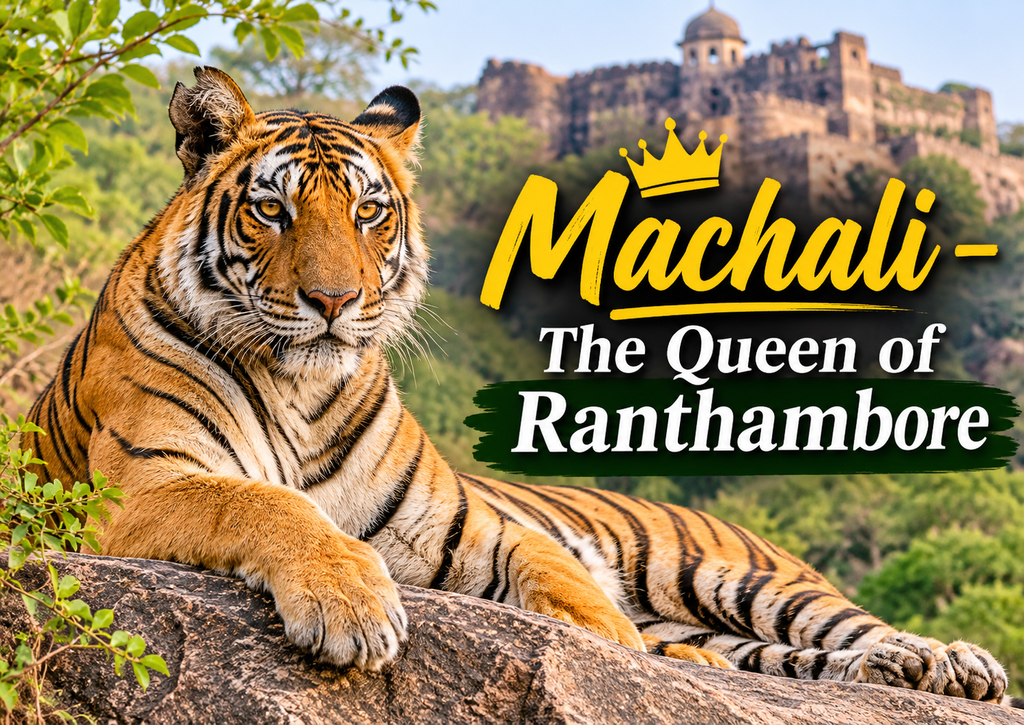
Machali Ranthambore is a name known to wildlife lovers across the world: the legendary tigress T-16, the queen of the lakes. She was not just a tigress. She was a celebrity, a survivor, a mother and a symbol of hope for tiger conservation in India. For nearly two decades, the story of Machali Ranthambore has drawn wildlife enthusiasts from every corner of the globe to Ranthambore National Park in Rajasthan.
In this article, we explore the life, legacy and legend of Machali Ranthambore, the tigress who earned the title “Queen of Ranthambore” and changed the way the world looks at tiger tourism.
Machali Ranthambore: Who Was the Legendary Tigress?
The story of Machali Ranthambore begins around 1997, when she was born in Ranthambore National Park. She was the daughter of a tigress known as T-15, and she grew up near the picturesque lakes of the park. Her name, “Machali”, means “fish” in Hindi. She earned it because of a distinctive fish-shaped mark on her face, near her cheek.
From a young age, Machali showed a confident and bold personality. Unlike many shy tigers, she grew comfortable with the sight of safari jeeps. This made her one of the most photographed and filmed tigers in the world, and it is a big reason why she became so famous among visitors.
Why Is Machali Called the “Queen of Ranthambore”?
She earned her royal title for several reasons:
- She ruled the best territory. Her territory included the lakes around Rajbagh, Padam Talao and Malik Talao, the most scenic and prey-rich parts of the park.
- She was a fearless hunter. Machali hunted everything from sambar deer to wild boar, and even crocodiles.
- She was the mother of a dynasty. Many tigers living in Ranthambore today are her descendants.
- She lived long. A wild tigress normally lives 10 to 15 years, but Machali survived to around 19 or 20, an extraordinary age for a wild tiger.
That is why Machali Ranthambore is remembered not only as a tigress but as a true ruler of her kingdom, respected by guides, photographers and forest staff alike.
The Famous Crocodile Fight
The most legendary chapter of her life came when she fought and killed a huge crocodile, reported to be around 14 feet long, near Rajbagh Lake. The battle was reportedly fierce, and Machali lost two of her canine teeth during the fight. This made hunting harder for her in later years.
Wildlife photographers and guides captured parts of this incident, and the story spread across the world. It earned her another title: “Crocodile Killer”. Because she lived near the lakes, she was also called “Lady of the Lakes”. The crocodile battle remains the most talked-about moment in Machali Ranthambore folklore, and guides still retell it on every safari.
Machali the Mother
She was equally remarkable as a mother. Over the years she raised multiple litters of cubs, and she is credited with helping to repopulate Ranthambore at a time when tiger numbers in the park had fallen sharply. Every Machali Ranthambore fan knows her daughters, including Sundari (T-17), Satara (T-18) and Krishna (T-19), who went on to establish their own territories and raise cubs of their own.
Many experts say a large share of the tigers in the park today trace their lineage back to her. This is why she is often called the “Grandmother of Ranthambore” as well as its queen. Her genes helped the park recover from one of its most difficult periods, and tigers from Ranthambore later helped repopulate other reserves, such as Sariska.
Machali and Tourism
No tigress has done more for Ranthambore tourism than Machali. Machali Ranthambore became a brand in itself, drawing visitors from India and abroad who came specifically hoping to see her. She appeared in documentaries and photography books, and she was featured by major international wildlife channels.
Some highlights of her fame:
- She was reported to be among the most photographed tigers in the world.
- She was honoured with a Lifetime Achievement Award for her contribution to tiger tourism and conservation.
- A postage stamp was issued in her honour.
- It is widely said that she brought enormous tourism revenue to the region over her lifetime, supporting local guides, drivers, hotels and communities.
For local families around Sawai Madhopur, Machali was more than a tiger. She was a source of livelihood and pride.
The Last Years of the Queen
As she aged, her missing canine teeth and the pressure from younger tigers made life harder. Younger tigresses, some of them her own daughters, began taking over parts of her territory. Forest officials kept a close watch on her and, when she became too weak to hunt on her own, provided food support to help her survive.
The final chapter of Machali Ranthambore ended on 18 August 2016, when she passed away at the age of about 20. The news saddened wildlife lovers around the world. She was given a farewell with honours by forest department staff, a rare tribute for a wild animal. Newspapers and international media carried tributes to her, and many called her passing the end of an era.
Machali Ranthambore Legacy: What She Left Behind
Although she is no longer alive, her legacy continues in many ways:
- Her descendants: Tigers in the park today carry her bloodline, and when you spot a tiger in Ranthambore there is a fair chance it is connected to her family.
- Conservation inspiration: Her story is often used to explain why protecting tigers and their habitat matters.
- Tourism and awareness: Guides and naturalists still tell her story to visitors on every safari.
- Cultural impact: She remains a symbol of strength, motherhood and survival in India’s wildlife history.
Where Did Machali Live? The Best Zones to Visit
The Machali Ranthambore territory was mainly around the lake areas of the park. If you want to experience the landscape she once ruled, these are the places to explore on safari:
- Zone 1 to Zone 5: These are the most popular zones for tiger sightings and offer a mix of lakes, forests and open grassland.
- Rajbagh Talao, Padam Talao and Malik Talao: These lakes were the heart of her kingdom, and they are beautiful places to see wildlife and the ruins of old palaces.
- Ranthambore Fort: Overlooking the park, the fort adds a historic backdrop and often features in safari photographs.
Since tiger movement changes with time, sightings can never be guaranteed. However, these zones remain among the best for seeing tigers, leopards, sloth bears, crocodiles and many bird species.
Best Time to Visit Ranthambore
If the story of Machali Ranthambore inspires you to visit, plan your trip well:
- October to March: Pleasant weather, good for comfortable safaris.
- April to June: Hot weather, but the best period for tiger sightings, because animals gather near water sources.
- July to September: The park remains closed in the monsoon season for the safe breeding of wildlife.
Safari bookings are limited and fill up fast, so it is wise to reserve your jeep or canter in advance. If you are planning a wider trip across Rajasthan, including Jaipur, Udaipur or Jodhpur, you can explore customised packages with Spidy Holidays.
Tips for a Memorable Ranthambore Safari
- Book your safari zone and timing early, especially in peak season.
- Wear light, neutral-coloured clothes (green, brown or khaki).
- Carry a good camera with a zoom lens and binoculars.
- Stay quiet and follow your guide’s instructions.
- Be patient. Tigers are wild animals, and every sighting is a gift.
Frequently Asked Questions (FAQs)
1. Who was Machali Ranthambore’s famous tigress?
Machali (T-16) was a famous tigress of Ranthambore National Park, born around 1997, known for her fearless nature and for fighting a crocodile.
2. Why is Machali Ranthambore’s queen called the Queen of Ranthambore?
She ruled the best lake territory for years, raised many cubs and lived much longer than most wild tigers.
3. When did Machali die?
She died on 18 August 2016 at around 20 years of age.
4. Is Machali still alive?
No, but her descendants still live in Ranthambore National Park.
5. Can I see Machali Ranthambore descendants on safari?
Many tigers in the park are her descendants, so you may see tigers from her bloodline, though sightings are never guaranteed.
Conclusion
Machali Ranthambore is more than a tigress story. She was a symbol of courage, survival and the success of conservation in India. Her life reminds us how precious wildlife is and why protecting national parks like Ranthambore matters. Even today, when you drive past the still waters of Rajbagh Talao, it is easy to imagine the Queen watching over her kingdom.
If you want to walk in the footsteps of Machali Ranthambore and experience the magic of the park yourself, book your Ranthambore safari with us and let us help you create an unforgettable wildlife adventure.