
Ranthambore
National Park
India’s Most Iconic Tiger Reserve
Ranthambore National Park, located at the meeting point of the Aravalli and Vindhya mountain ranges in Sawai Madhopur, Rajasthan, is one of India’s most renowned wildlife destinations. Covering around 1,334 sq km, the park was once a royal hunting ground of the Maharajas of Jaipur before being declared a national park in 1980. Today, it stands as one of the finest examples of India’s Project Tiger conservation efforts.
Why Ranthambore?
Ranthambore is famous for its remarkable tiger sightings and unique blend of wildlife, lakes, forests, and historic ruins. Unlike many tiger reserves where tigers are mostly difficult to spot during the day, Ranthambore offers excellent opportunities to observe these magnificent animals in daylight, often around water bodies and scenic landscapes.
- 70+ Royal Bengal Tigers — one of India’s most prominent tiger populations
- 10 Safari Zones — each offering different landscapes and wildlife experiences
- Ranthambore Fort — a historic UNESCO World Heritage Site overlooking the park
- 3 Major Lakes — Padam Talao, Rajbagh Talao, and Malik Talao
- 300+ Bird Species — making Ranthambore a fantastic destination for birdwatchers
Safari Options
Ranthambore offers two main types of safari experiences:
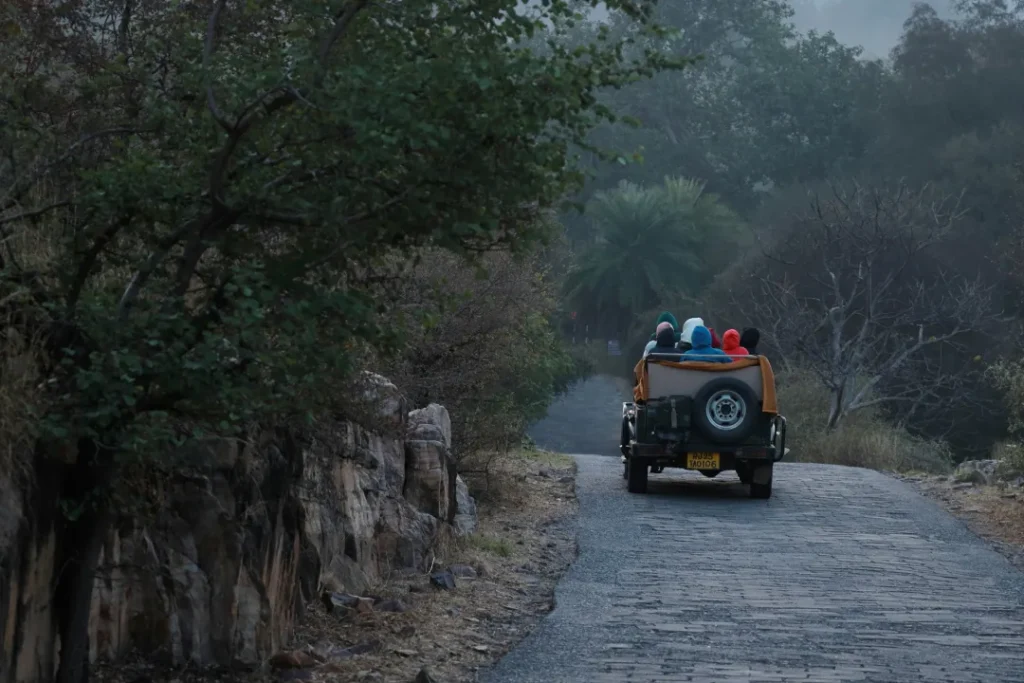
- Gypsy Safari (6-seater) — An open-top 4×4 jeep offering a more private and flexible safari experience. It is ideal for families, photographers, couples, and wildlife enthusiasts looking for a personalised jungle experience. Gypsy safaris operate across all 10 zones.
- Canter Safari (20-seater) — A shared open-top safari vehicle that offers a comfortable and budget-friendly way to explore the park. Canter safaris operate in selected core zones, mainly Zones 2–6.
Safaris are conducted in two shifts — morning and afternoon — with each safari lasting approximately 3 hours.
Best Time to Visit
Ranthambore National Park generally remains open from October to June and closes during the monsoon months from July to September
- October–March (Winter) — Cool and comfortable weather with excellent opportunities for wildlife sightings. Temperatures generally range between 8°C and 25°C.
- April–June (Summer) — Hotter weather, but one of the best periods for tiger sightings as wildlife frequently gathers around lakes and waterholes. Temperatures can range from 30°C to 47°C.
Famous Tigers
Ranthambore has been home to some of India’s most iconic and celebrated tigers, whose stories have become part of the park’s legacy:
- Machali (T-16) — The legendary Queen of Ranthambore, known for her remarkable reign and unforgettable presence.
- Arrowhead (T-84) — A famous tigress from Machali’s lineage, known for her territory around the park’s scenic zones.
- Noor (T-39) — One of Ranthambore’s most recognisable and frequently photographed tigresses.
- Sultan (T-72) — A powerful male tiger associated with the territory of Zone 5.
- Krishna (T-19) — A celebrated tigress known for successfully raising multiple cubs.
How to Reach
- By Air: Jaipur International Airport is the nearest major airport, approximately 160 km away and around a 3-hour drive from Ranthambore.
- By Train: Sawai Madhopur Junction is the closest railway station, located around 11 km from the park and well connected with Delhi, Jaipur, Mumbai, and other major cities.
- By Road: Ranthambore is easily accessible by road from Jaipur, Kota, Delhi, and other major cities in Rajasthan.
Nearby Attractions
- Trinetra Ganesh Temple — A famous temple located inside the historic Ranthambore Fort.
- Jogi Mahal — A historic forest lodge overlooking the beautiful Padam Talao.
- Chambal River Boat Safari — A scenic wildlife experience located around 60 km from Ranthambore.
- Keoladeo Bird Sanctuary, Bharatpur — One of India’s finest birdwatching destinations, approximately 200 km away.